

Environmental Evolution - 224 Oriental Parade "Cave" | Wellington
In the essay ‘Pacific Rim’ in the August 1991 Architectural Review, architectural writer Peter Buchanan suggested people who have migrated by sea such as those around the Pacific rim have developed as tension cultures as opposed to compression cultures of old world Europe where building are constructed of stone and brick in order to defy nature and time. Rather than resist nature, new world tension cultures build with lightweight renewable elements to bend with the earthquakes or wind and ride out the storms. The combination of these different forms can give security of enclosure as well as flexibility to engage with or retreat from the land as mood and climate allow.
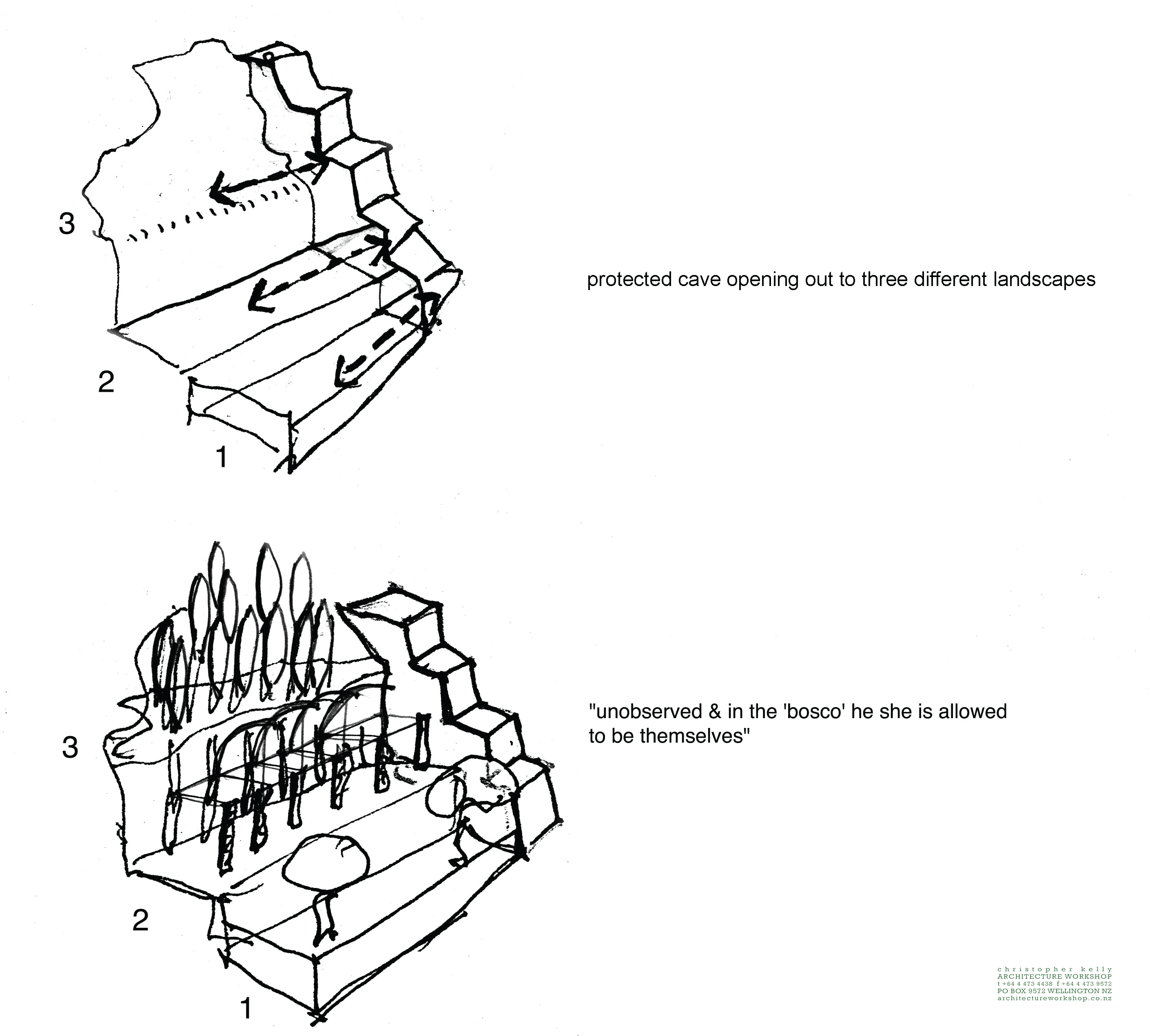
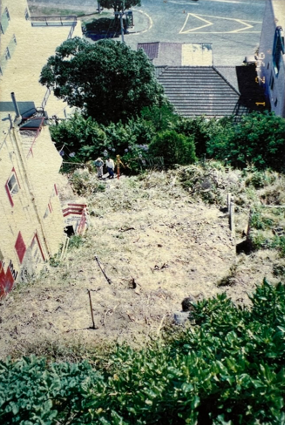
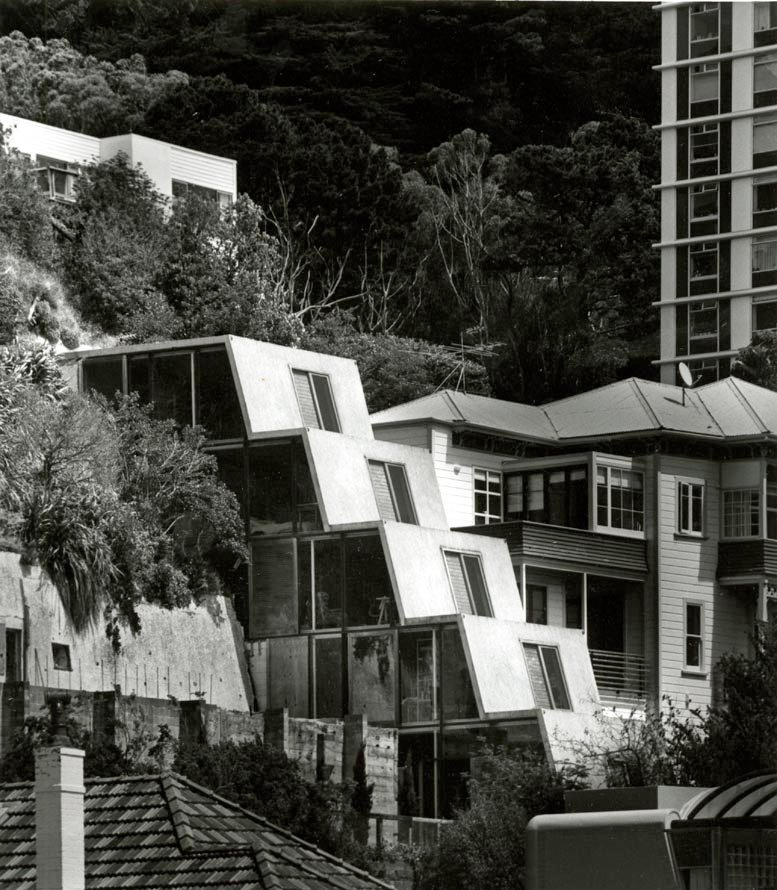
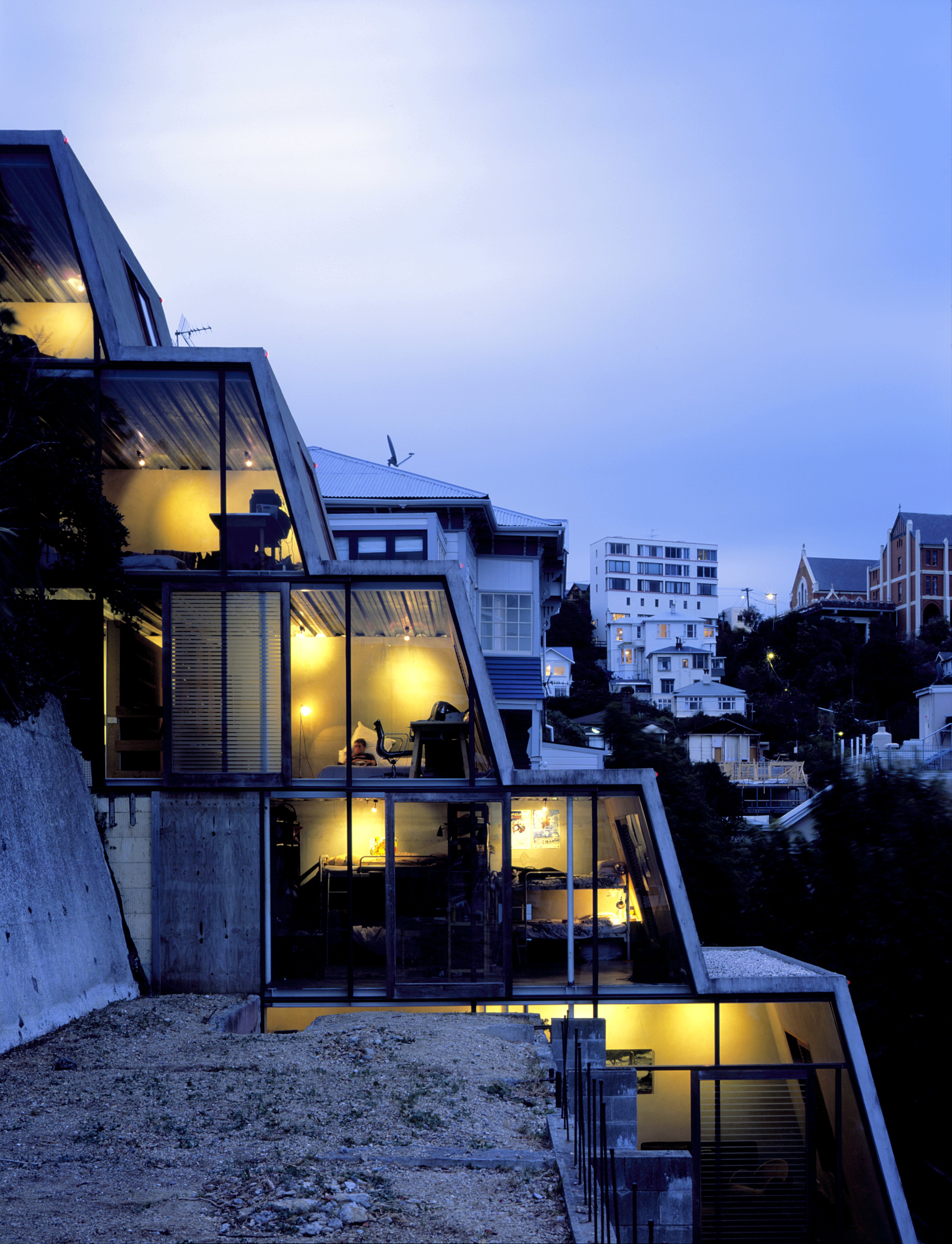
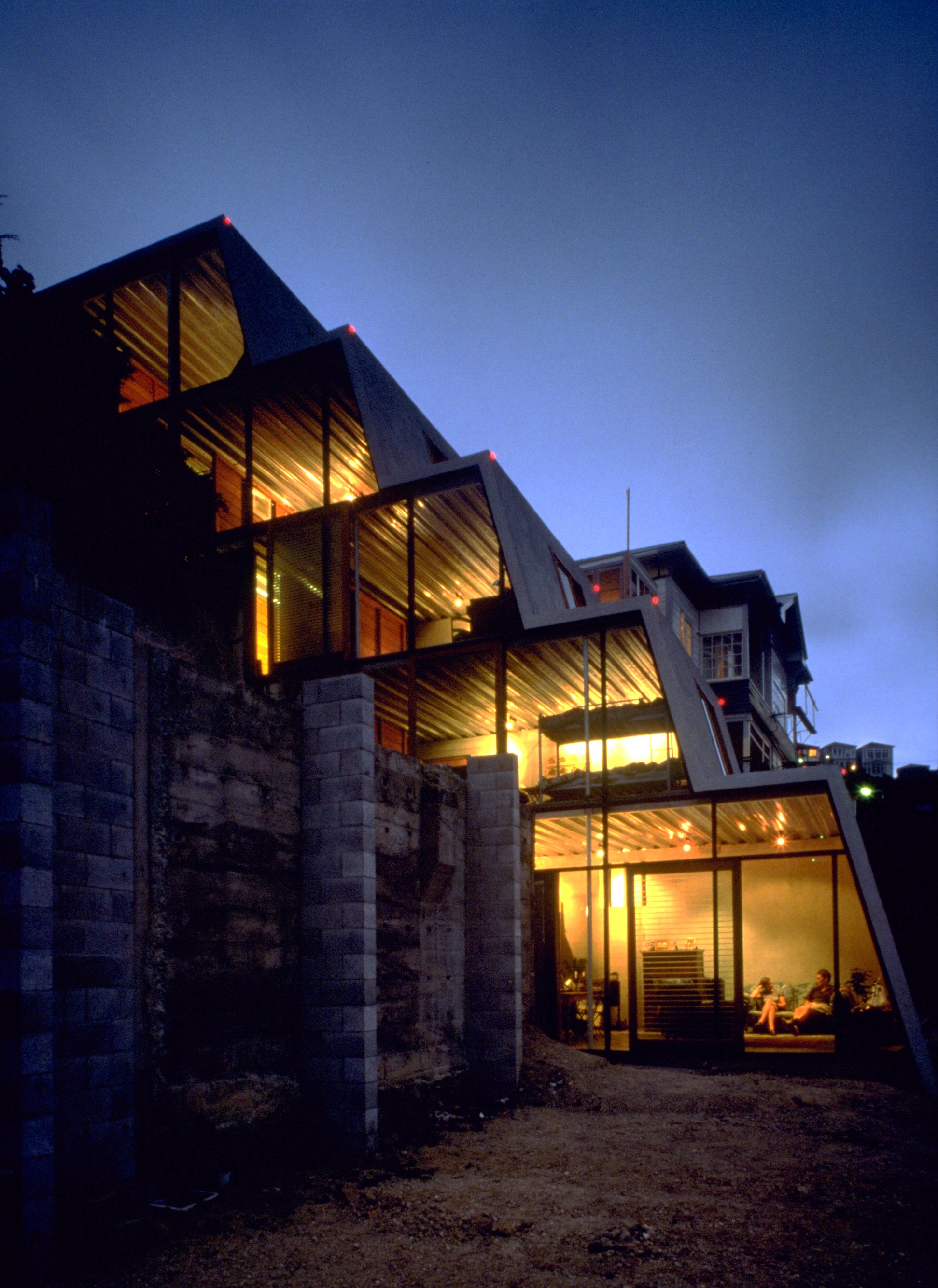
On a steep eroded sea escarpment facing the inner harbour, this family house is being built in two stages. The first part ‘the cave’, occupied in 1997; the second part ‘the tent’, expectedto be finished in 2005. Architecture Workshop is interested in undoing the hierarchy between architecture, landscape and infrastructure, and for this house the intention was for the whole site to remain as landscape. The conceptual idea is a constructed environment.
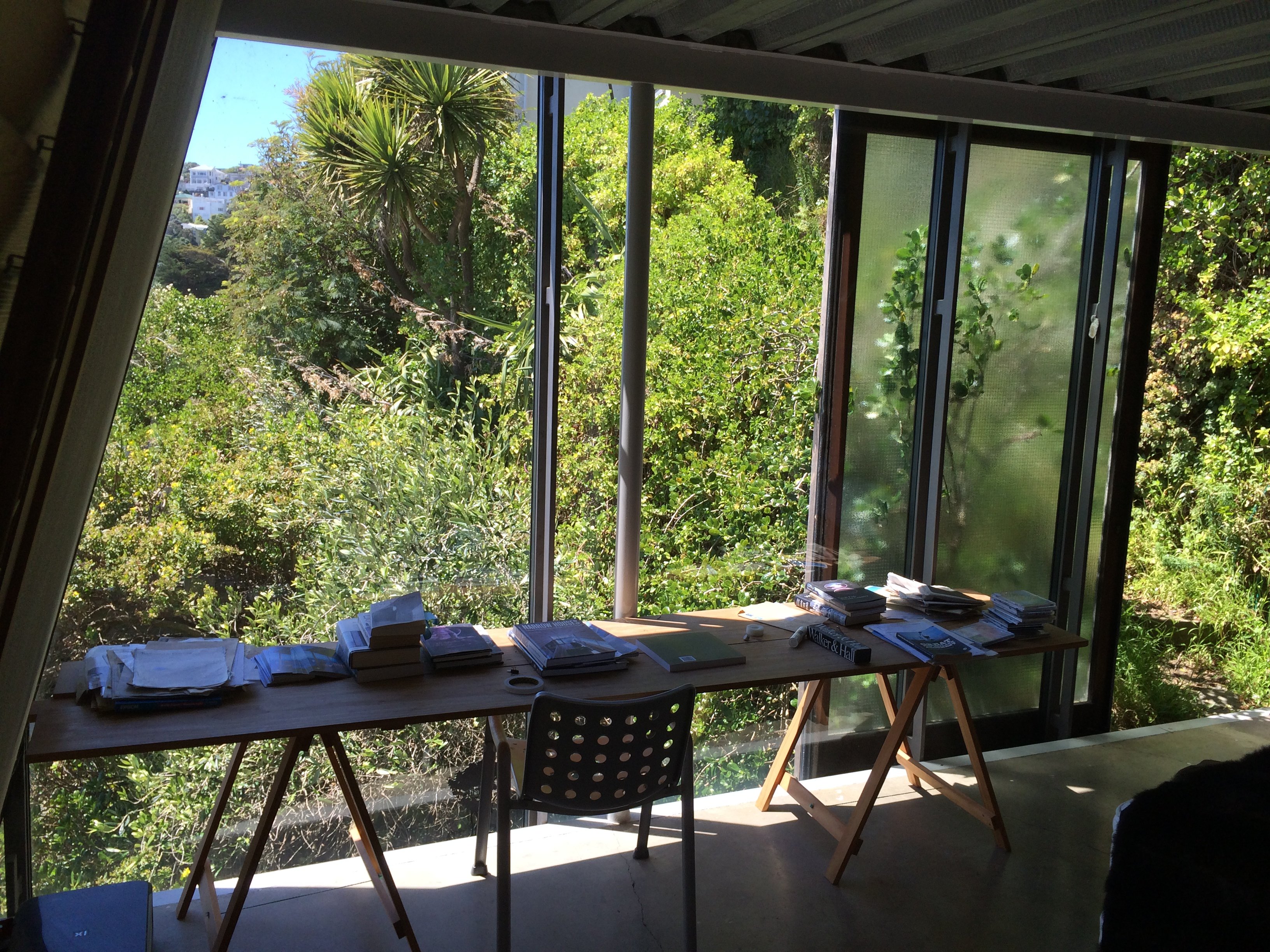
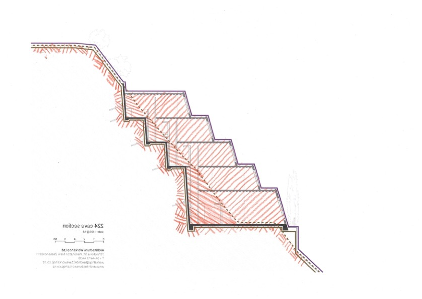
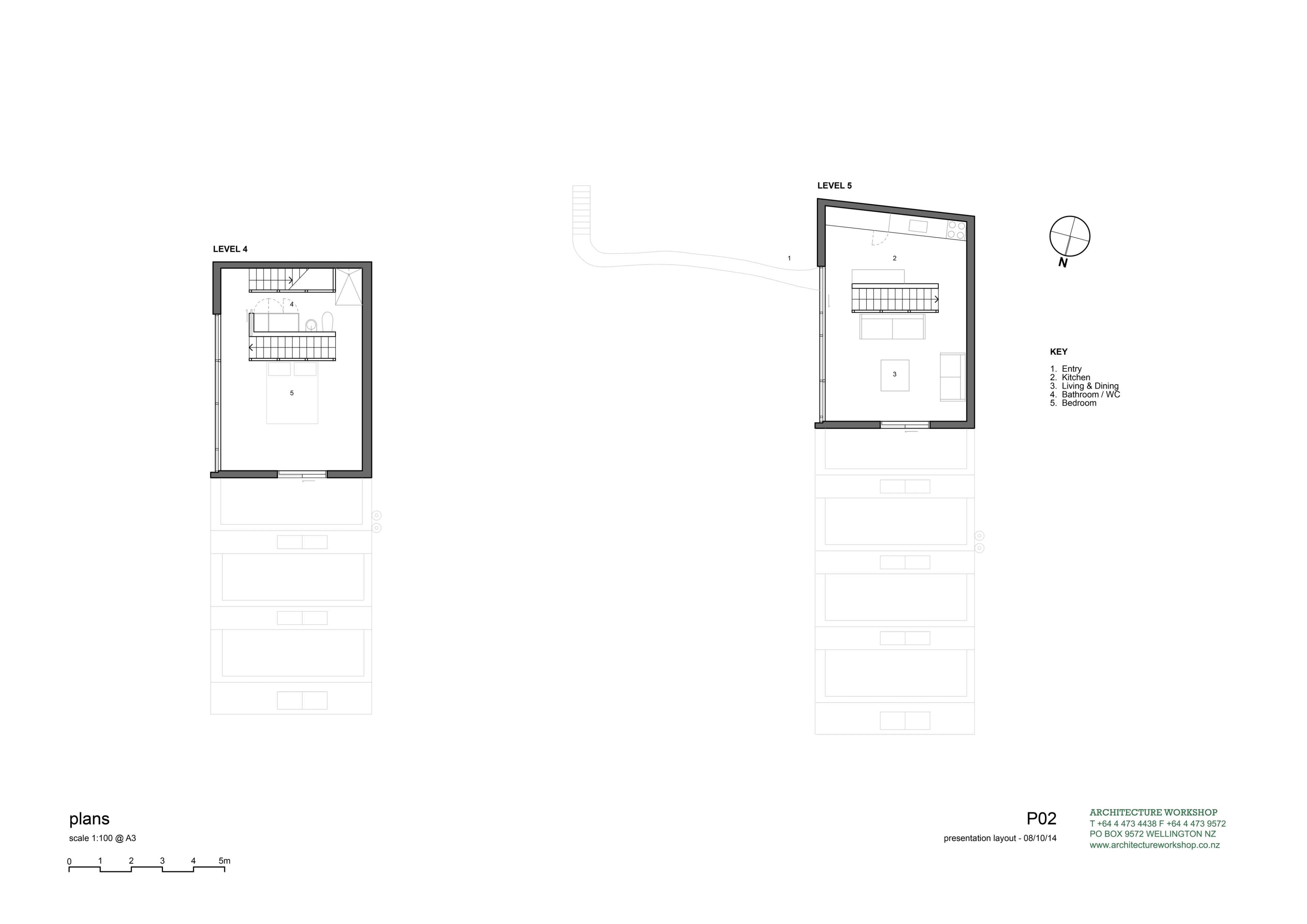
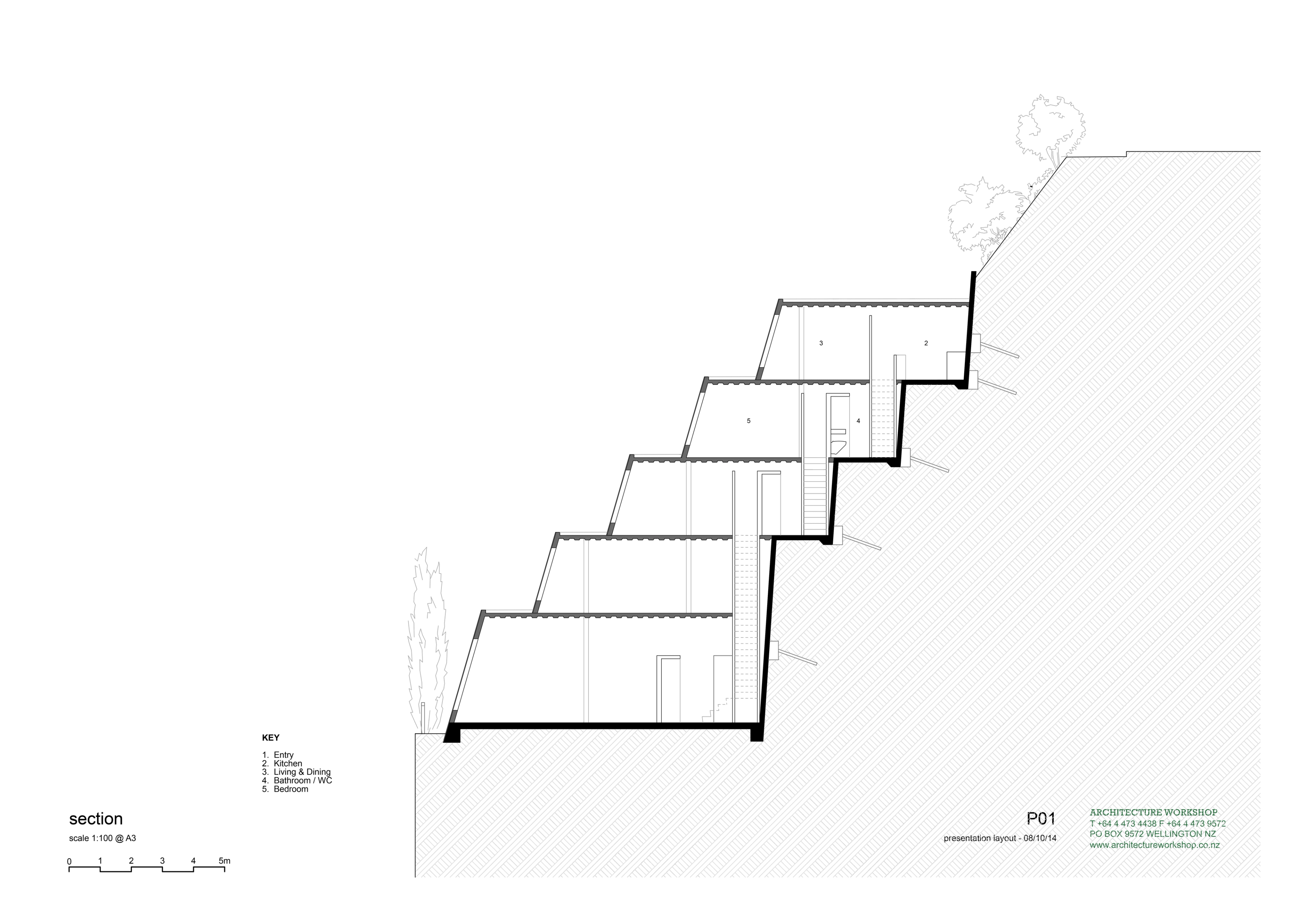
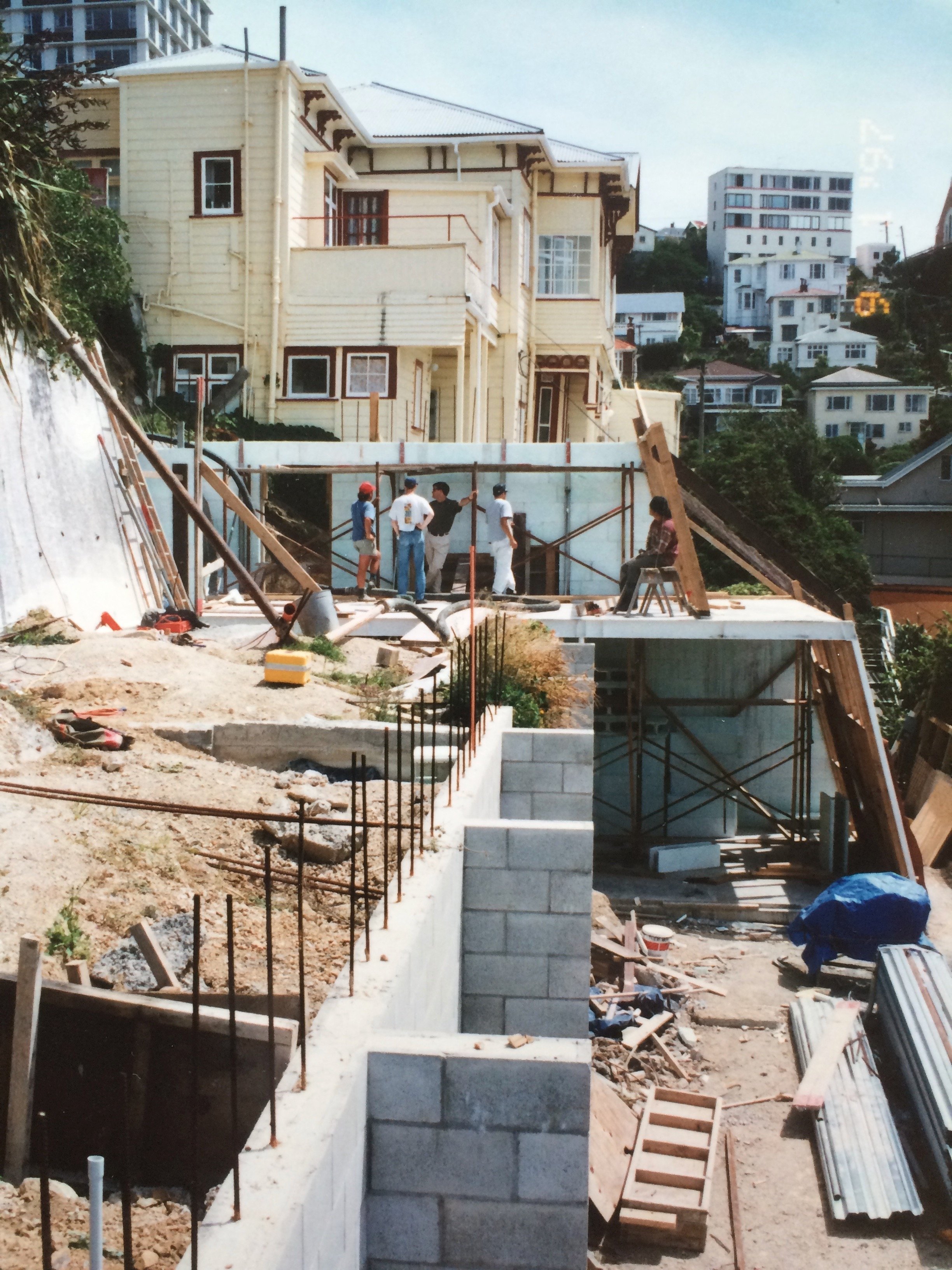
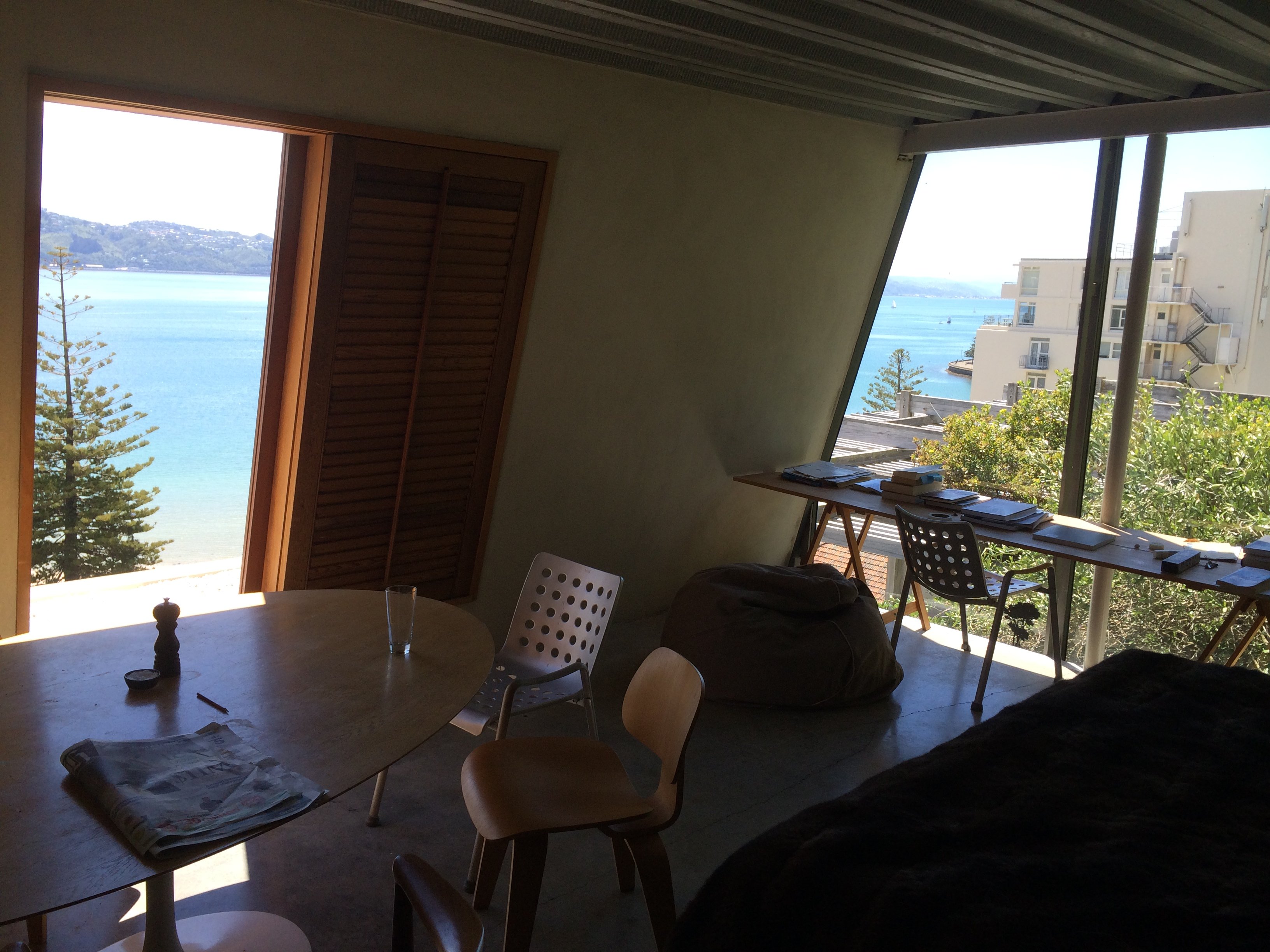
The cave, a thick heavily insulated concrete structure is placed against the boundary to provide retreat and privacy. While it restricts the views for promenaders on the street below its fully glazed northeast wallis open to the main view up the harbour. This orientation also provides passive solar gain early in the day. The stepped form follows the town planning height planes along the neighbouringboundary and creates seclusion for the users and shelter from the south. The stair across the back separates ‘ the served and servant spaces’ and mimics the way we zigzagged up the steep slope before the building was made.
In spring when the cherry trees blossom, the Japanese hang curtains among the trees in the garden -a beautiful image we think, 'so lattice-like and permeable that it can approximate the temporary tents or huts of nomads'. This idea of Japanese architect Toyo Ito, of turning a house into a more fluid entity, is a form of questioning the house as a permanent locus and a consumer status symbol.
The other living activities are to be supported with only the essential or minimal architectural intervention:
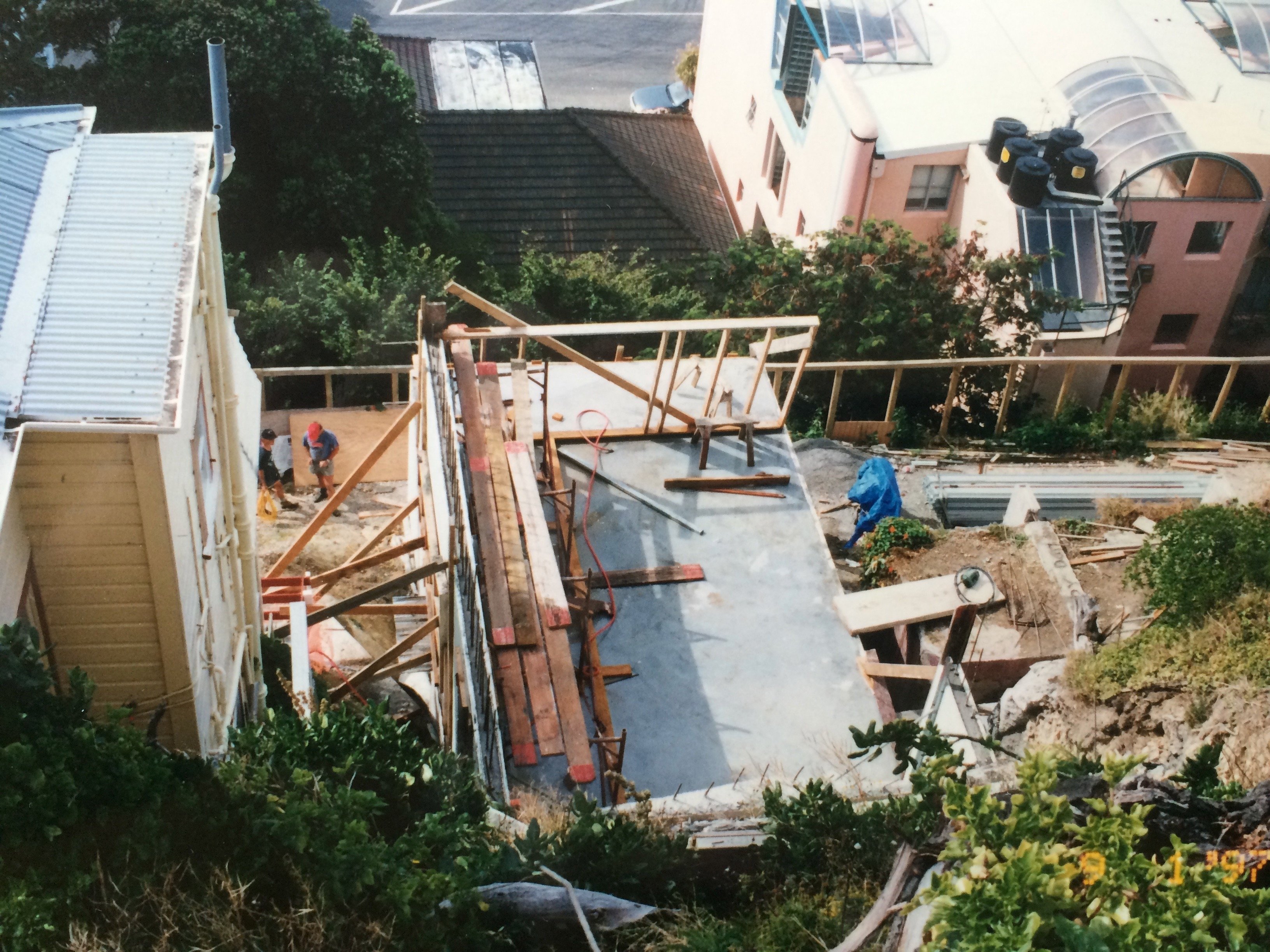
On the ground level we excavated out the old basement of the previous house to make a formal enclosed walled courtyard with one side open to the north.
On level 2, the main living level, we have constructed a tall lightweight timber framework that sits on the old concrete retaining wall. This becomes a large ‘outdoor room’ with openable glass walls.
On Level 3, two work pod tree huts are hung under the overhead timber canopy. The canopy is primarily to give privacy from the overlooking neighbours.
On Level 4 and 5 the glass sidewall of the cave slides open to access the steep slopes of a wilder wind-formed garden, to be further planted in flax and kanuka. Lying back in the late afternoon sun on the warm steep bank, the heat releases the resinous smell of the vegetation.
‘Man feels truly at home in large sections of the wood far removed from views and perspectives. He feels unobserved and unconsciously allowed to be him/her self completely’
Essay by T.O Enge -The Garden as Landscape of Ideas.