








Seymore House | Belmont
Belmont, Wellington - Architecture Workshop 1993
John and Liz Seymour wanted some minor alterations to their existing French kitset home in bush-clad Wairere Road. We thought the existing house wouldn't accommodate some of the suggested changes. A new building on a part of their existing section became the preferred option. The cost had to be kept in the 'speculative house builder's range'. The use of commercial components to save labour (eg Bondor cool store E.P.S. roof panels) and standard materials where possible (plywood and ranchsliders) kept the final cost around $900 per m2.
landscape concept
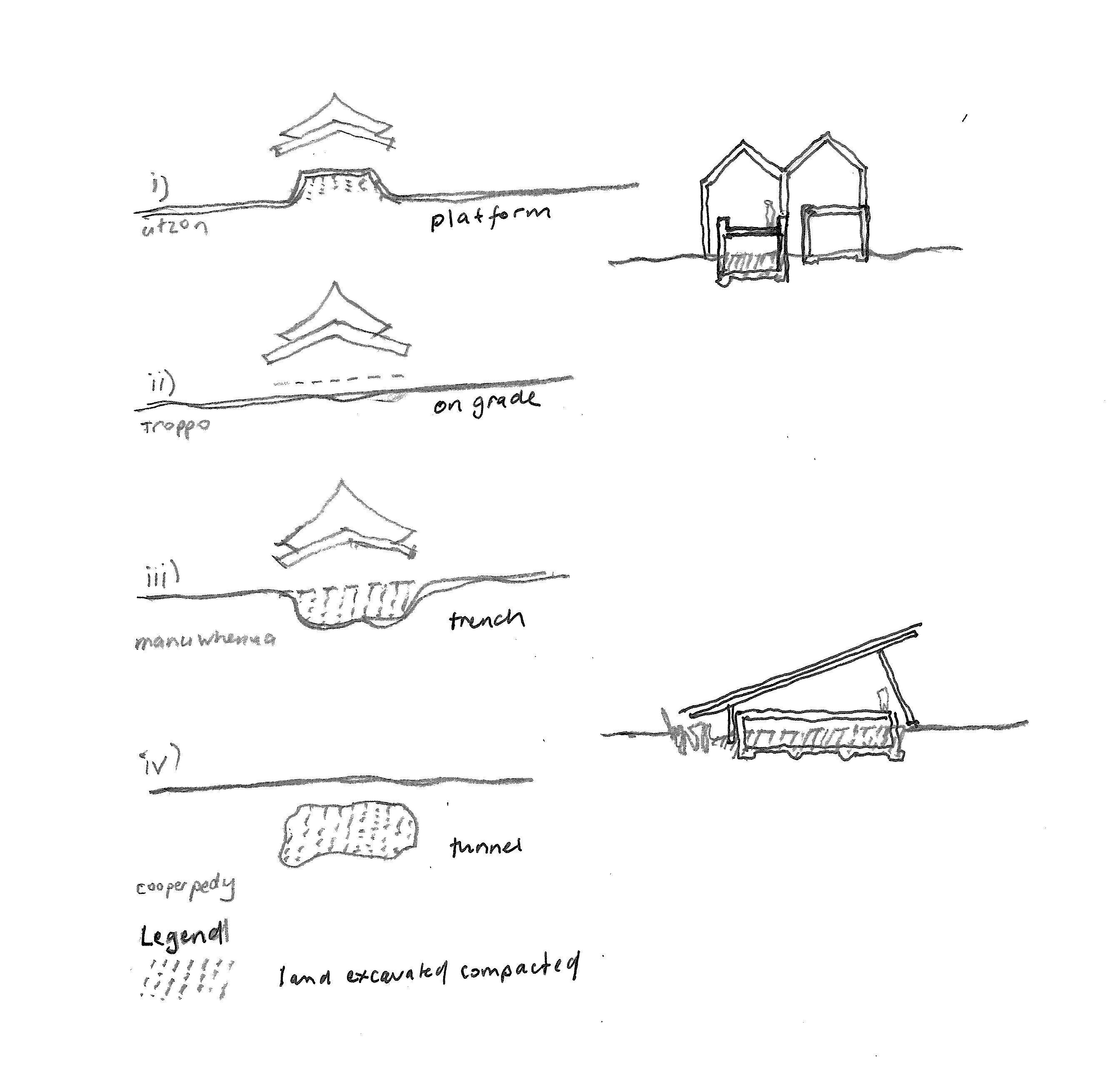
The design of the house takes a lesson from the old world landscape and inspiration from some of the existing forms in the new world. Early renaissance landscape design in Italy emphasised architecture interlocking with the garden but separate from the countryside. Palladio's Villa Rotunda (c1550) marked a change in this concept of landscape design. The Villa Rotunda engages with the surrounding countryside and horizon directly without the intermediary of a garden. The Seymours were looking for a more natural alternative to the suburban garden
base platform
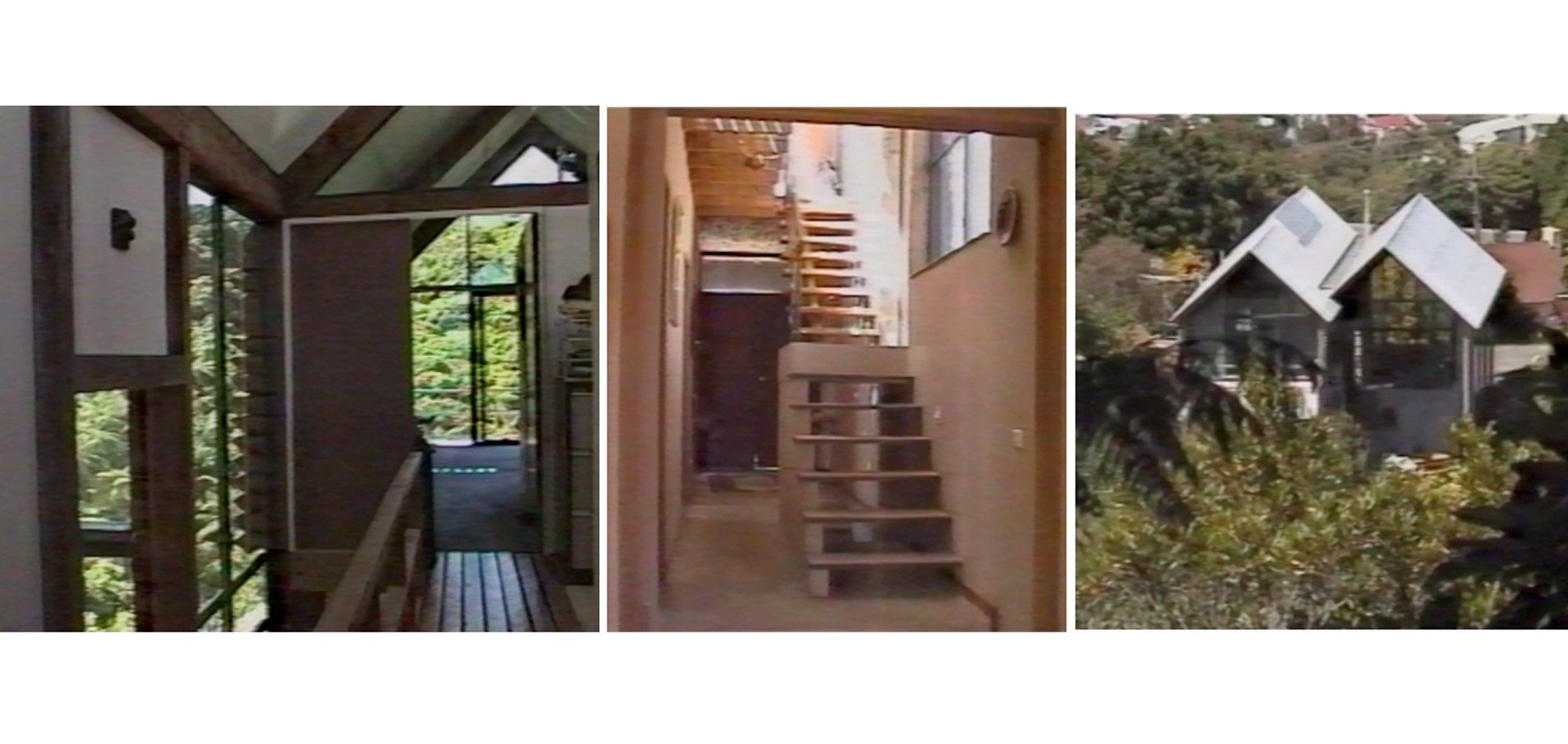
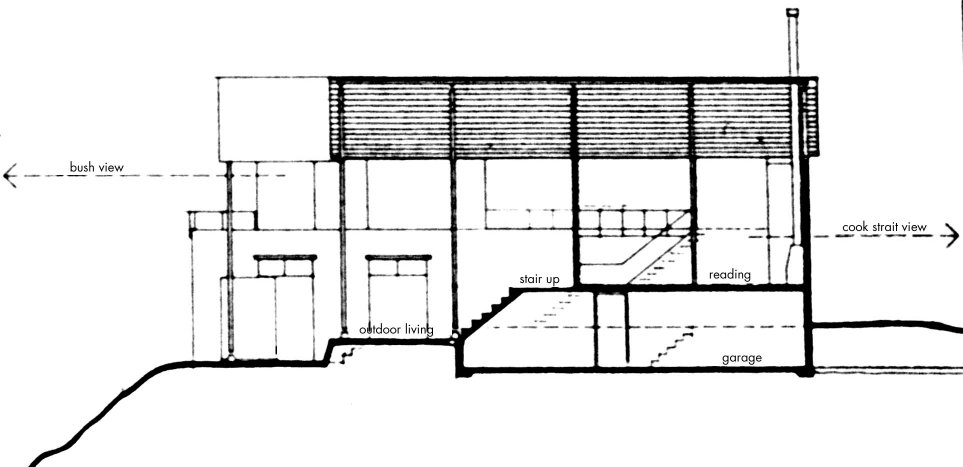
Drawing from this idea, the base platform of Seymour House is integrated with the natural topography and abstracted. The garage is excavated into the ground and the lower storey's thick walls are plastered to become part of the land.
sheltering roof
People who have migrated by sea, such as those around the Pacific rim, have developed as tension cultures (using renewable lightweight elements). This is opposed to the compression cultures of Europe, where the stone and brick buildings use mass to defy nature and time. Our timber buildings of lightweight frames seem to retain the creaky resilience of the sailing craft of our ancestors.
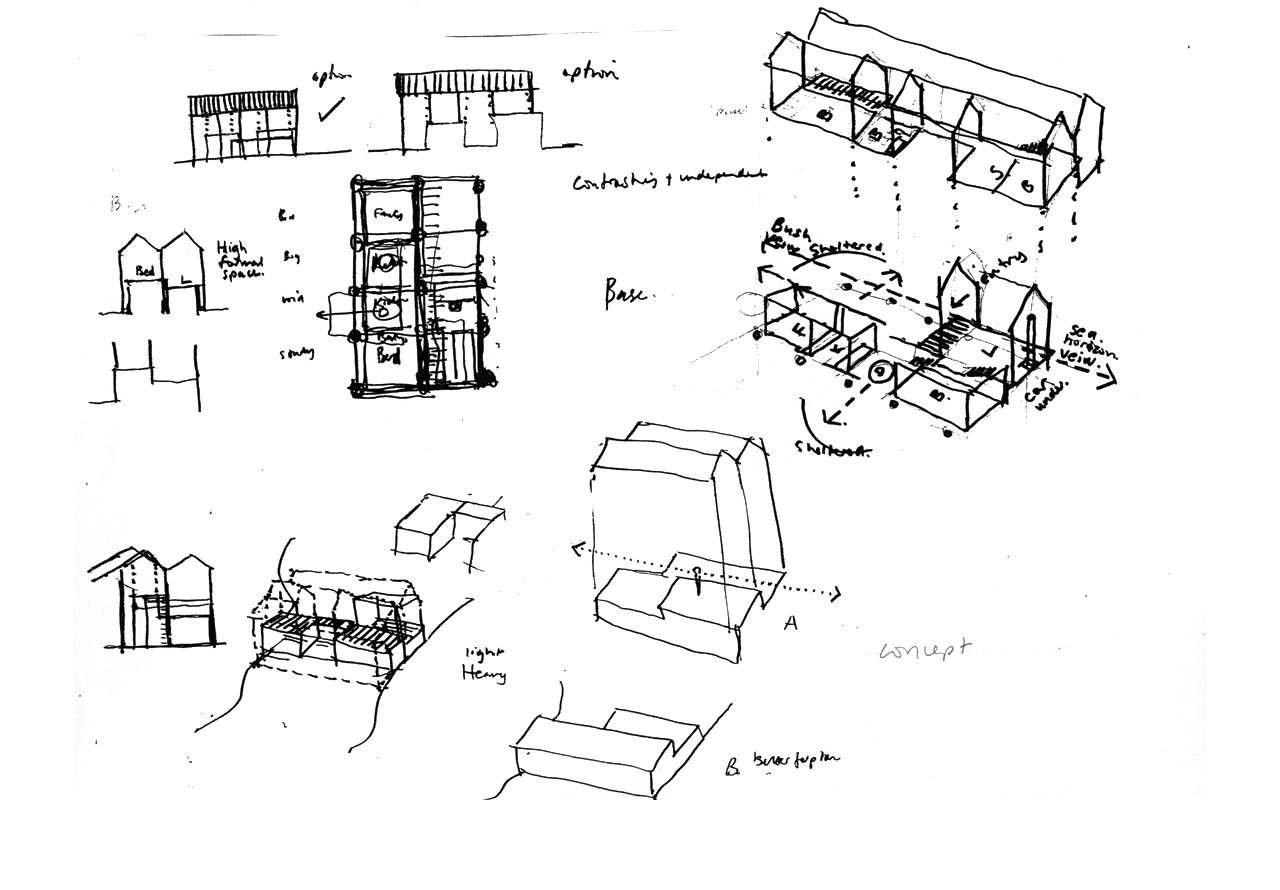
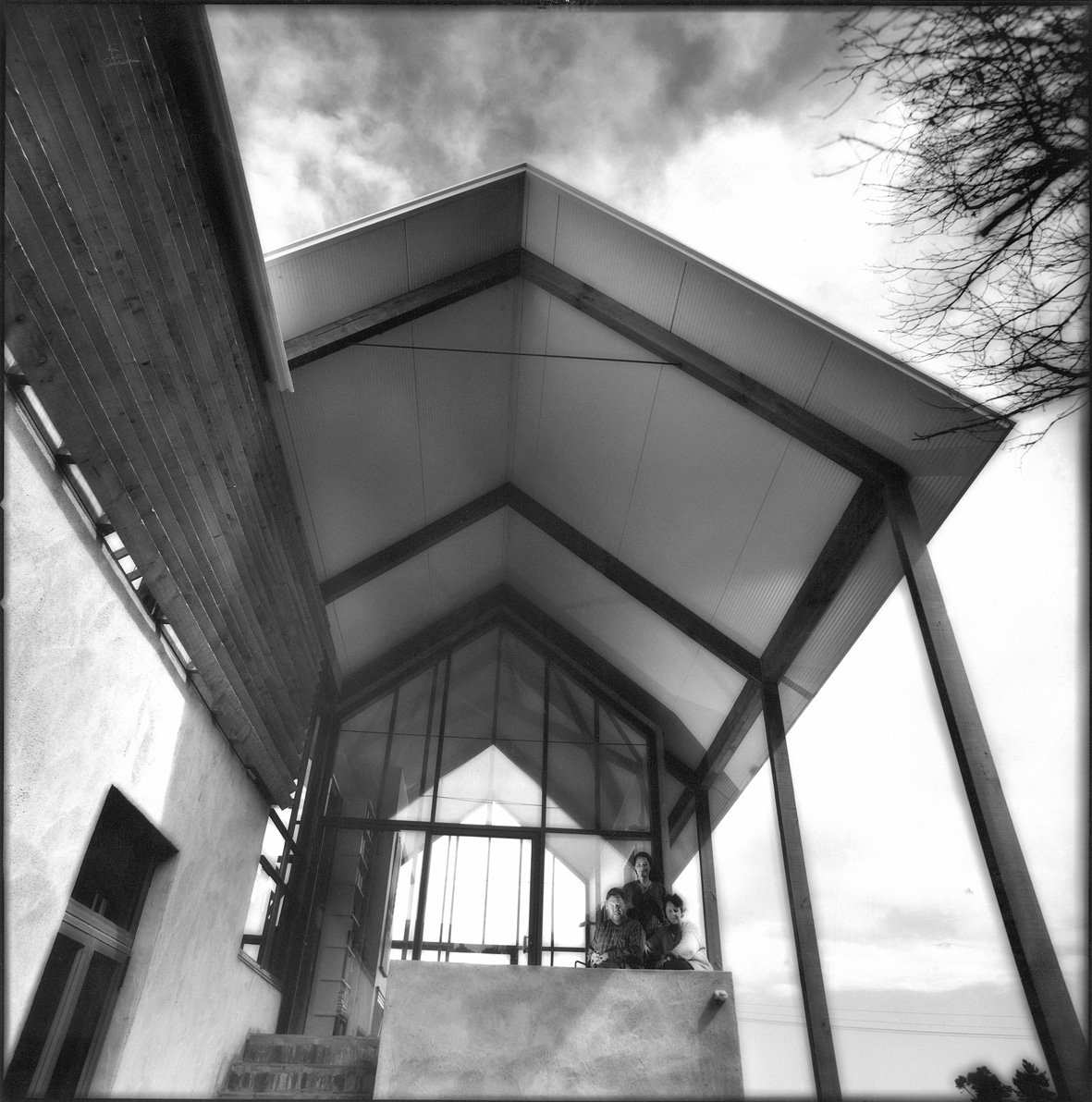
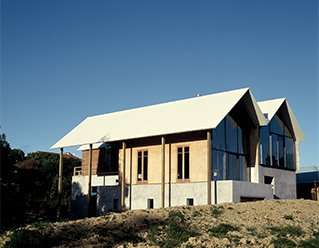
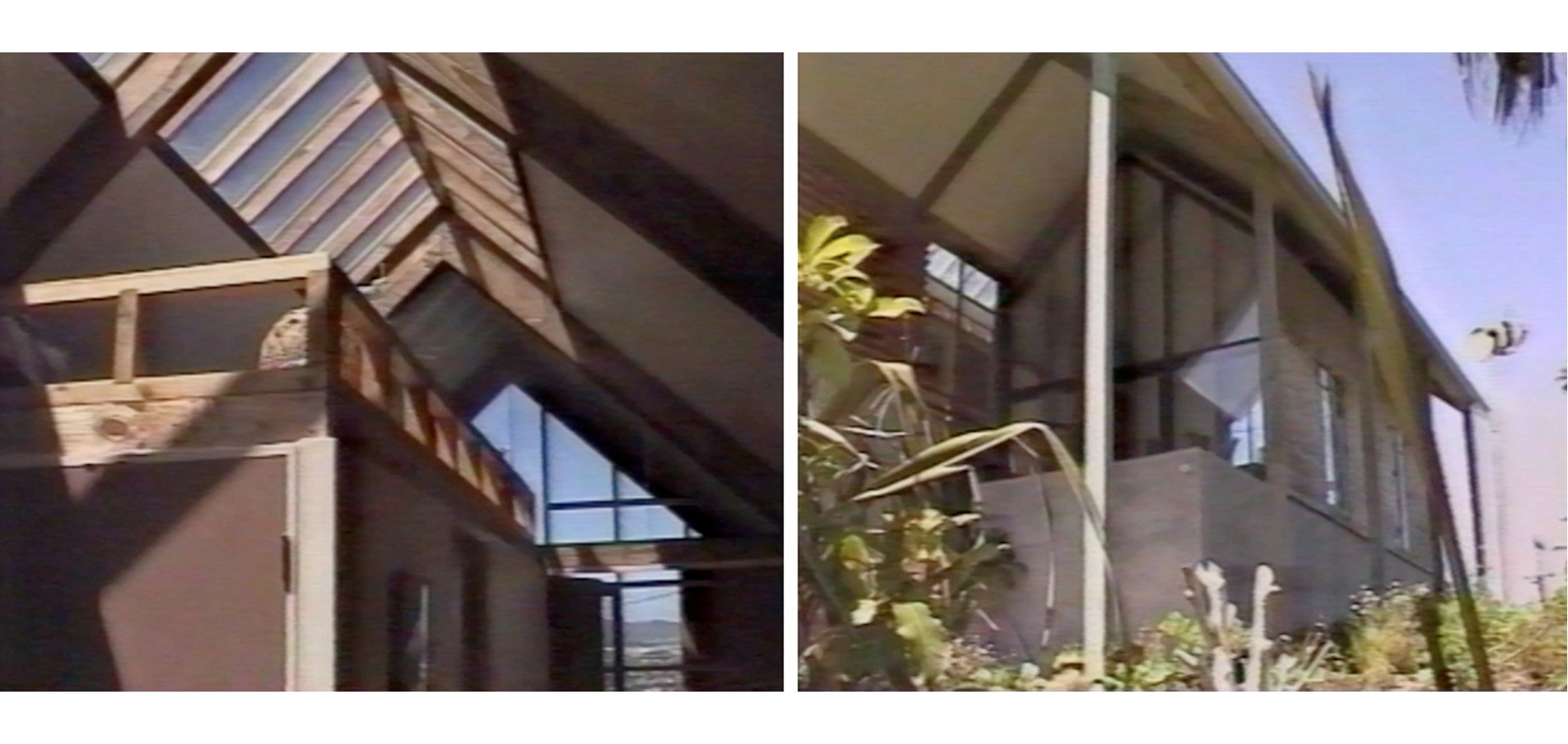
Here the fly tent translated into more permanent construction,has become the gable, one of the symbols of house. The light weight roof, macrocarpa louvres and plywood elements contrast the thick walled heavyweight rendered base.
transparency
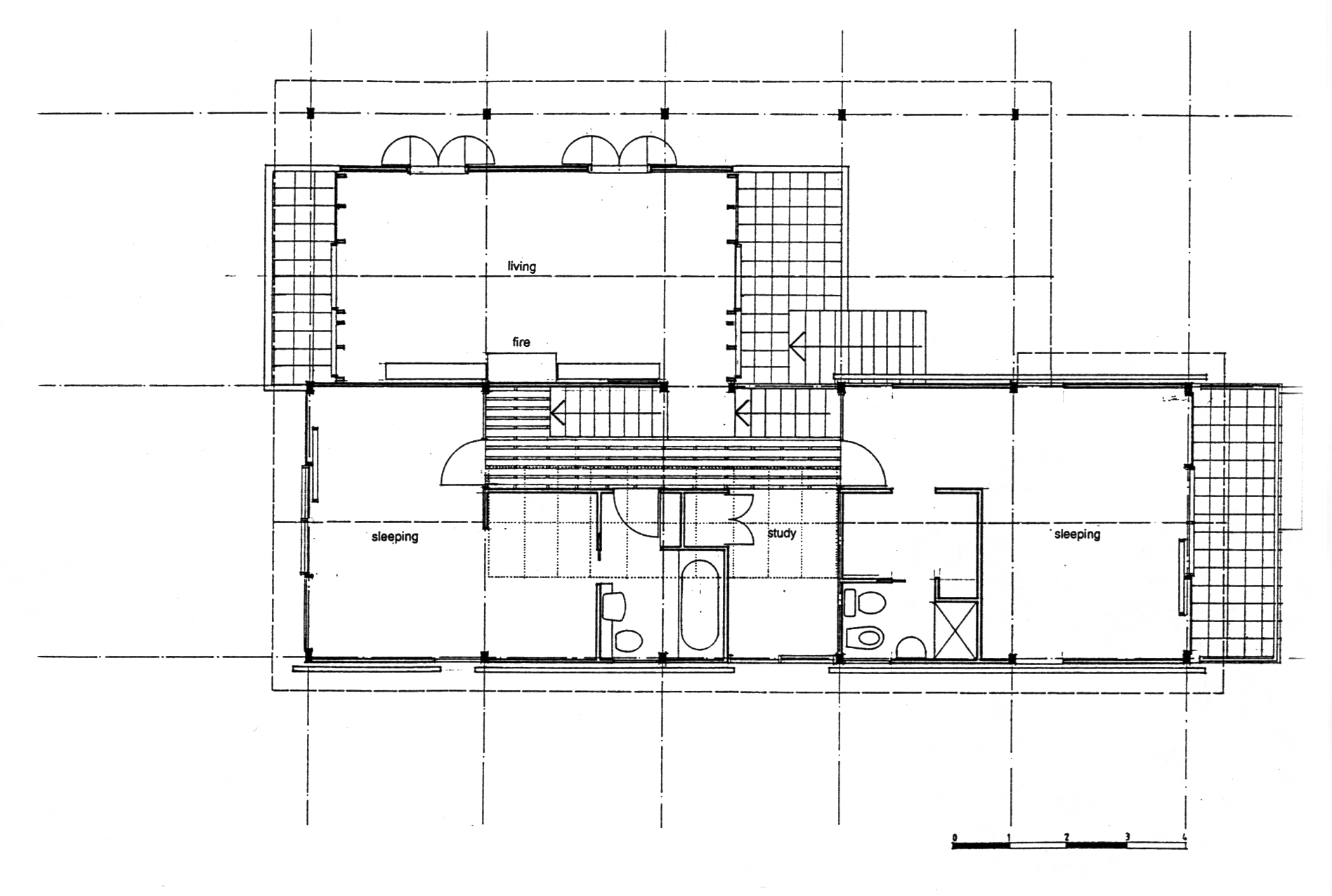
Under the sheltering roof, the upper levels of the building are transparent and layered. The glazed gable ends engage two contrasting outlooks: the close textural view of native jurassic punga to the North and the far curve of Cook Strait beyond the harbour heads to the South. The stair and circulation hall way are treated as external to preserve an immediacy with the outdoors. The open decking under the skylight lets the light filter through to the entrance hallway.
construction language
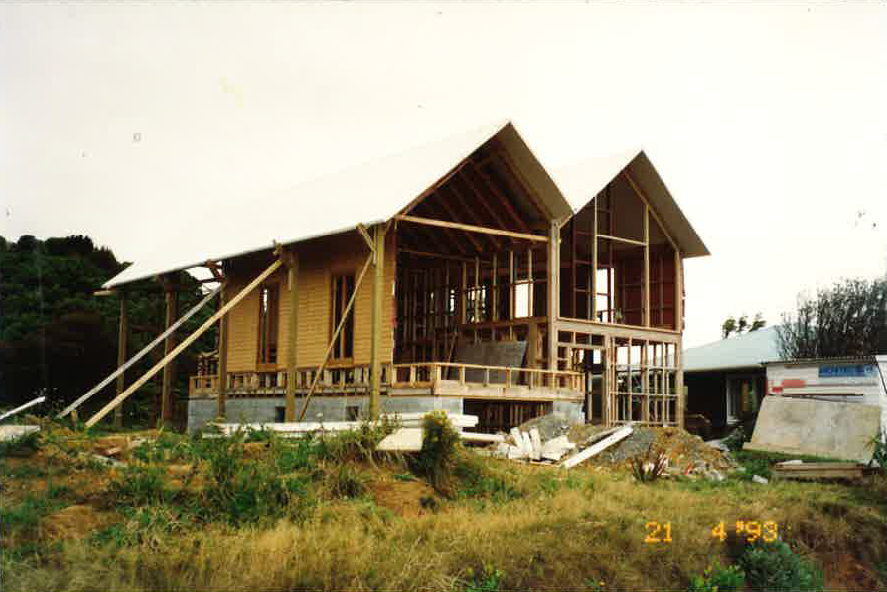
The making of the building is stripped back to first principles. With this first house architecture workshop set out to challenge the New Zealand light timber construction code (where any window can be knocked into any wall) with a rational timber portal frame that provides rigorous constraints for the assembly. The aim was to create a more timeless dwelling, and I guess challenge the amorphous kiwi suburban house. Separating the functions of the cladding, by articulating the construction elements, helps express the parts of the building The detailing is rudimentary and immediate and expresses the hierarchy of the structure of the house.
citation
Seymour House Belmont, Architecture Workshop
New Zealand Institute of Architects - Regional Architecture Award 1994
“A flytent in the bush provides a favourite kiwi archetype for shelter. Artfully interpreted and meticulously applied, this single poetic idea informs composition, structure and construction on the Seymour House. The result is refined rather than rustic. Taut spaces and trim details evoke the elemental pleasures of the land. But the simplicity and clarity of the image depends on bold technical innovations which add to the lexicon of new Zealand's domestic architecture”
Engineer: Clendon Burns & Park
Builder: Sparrow Construction
Date of Commission: July 1991
Date of Completion: Sept 1993
Awards
NZIA Regional Architecture Award, 1993
Publications
Walsh, J. (2007, March). Journey Man. House New Zealand. (03). pp. 89-104